
After the easing of lockdown in mid-May, auto companies were able to resume production in a phased manner, but the ramp-up was slow due to a broken supply chain, and lockdown-induced restrictions.

The country saw a massive year-on-year surge in the demand for electric vehicles, with retail sales of electric two-wheelers rising by 58 per cent, passenger vehicles by 130 per cent, three-wheelers by 82 per cent, and commercial vehicles by 171 per cent in March 2023, according to the data shared by the Federation of Automobile Dealers Associations (Fada). According to a report by JMK Research, the EV segment as a whole grew by 157 per cent during FY23, to 1,180,597 units, from 458,746 units a year ago. Overall, EV sales in March 2023 rose by 82 per cent from the March 2022 figure, the JMK report added.
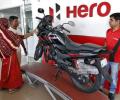
The two-wheeler segment has shown signs of recovery in the first half (H1) of calendar year (CY) 2024, largely driven by improving performance in rural areas. According to the Federation of Automobile Dealers Associations, rural contribution to two-wheeler sales surged by 57-60 per cent in the April-June quarter of 2024-25, indicating a rising demand in these regions. Experts believe that this trend will continue, supported by a favourable monsoon season and government initiatives aimed at rural development.

The move will primarily impact luxury car companies like Mercedes Benz, BMW, Audi and Volvo and bike brands like Triumph and Harley Davidson.
Top gainers in the Sensex pack included Sun Pharma, TechM, Axis Bank, L&T, Reliance Industries and ICICI Bank, which rose up to 2.66 per cent.

Skoda Auto, Volvo Cars and Daimler India Commercial Vehicles are not participating in the Expo.

Maruti ready to upgrade safety features.

India will not tailor its policies to suit US EV maker Tesla, and its laws and tariff rules will be formulated to attract all-electric vehicle manufacturers from across the world to set up a base in the world's fastest-growing economy, Commerce and Industry Minister Piyush Goyal said. Tesla has been seeking an initial tariff concession that would allow it to offset 70 per cent customs duty for cars priced less than $40,000, and 100 per cent for cars of higher value.

Senior Tesla executives including those from its supply chain are planning to come to India on Wednesday and Thursday for meetings with government officials, including those in the Prime Minister's Office, according to sources. Prashant R Menon, director of Tesla India, did not respond to a specific query on the meetings. Sources say that the executives are coming to see how they can expand and develop local sourcing of components from India for the Tesla car.

There were certainly qualities adhering to the Tata Group, which emanated from the persona of Ratan Tata. Most notable of these would be the low profile he maintained, which sharply contrasted the in-your-face celebrity status, celebration of wealth and pursuit of importance many of liberalised India's rich, love, notes Shyam G Menon.

Whether it's Carrefour, Ford, or other foreign majors, they are ready to adjust their strategies and design their plans in a way that would address the Indian consumption story.

Tata Motors on Tuesday said its electric vehicle arm has reduced prices of two models -- Nexon.ev and Tiago.ev -- by up to Rs 1.2 lakh on account of reduction in battery cost. The auto major has cut the price of Nexon.ev by up to Rs 1.2 lakh and now the model price starts at Rs 14.49 lakh. Similarly, the company has reduced the prices of Tiago.ev by up to Rs 70,000 with the base model now starting at Rs 7.99 lakh, Tata Motors said in a statement.
Dealers say that the full-year outlook remains negative with a projected contraction in retail sales of 15-35 per cent across segments, save tractors, which look set to clock a positive annual growth.

In the Sensex pack, IndusInd Bank was the top gainer, soaring around 8 per cent, followed by Bajaj Finance, Axis Bank, PowerGrid, ONGC, ICICI Bank, Sun Pharma and M&M.

Chinese automakers Great Wall Motors, FAW Haima Automobile, and Changan Automobile, after dithering about entering India for some years, have been encouraged by the robust sales performance of the late entrants Kia Motors and MG Motors even in a slowing market.

The output of eight core infrastructure sectors contracted for the third month in a row by 1.3 per cent in December 2020, dragged down by poor show by crude oil, natural gas, refinery products, fertiliser, steel and cement sectors. The core sectors had expanded by 3.1 per cent in December 2019, according to the provisional data released by the Commerce and Industry Ministry on Friday. Barring coal and electricity, all sectors recorded negative growth in December 2020. During April-December 2020-21, the sectors' output declined by 10.1 per cent against a growth rate of 0.6 per cent in the same period of the previous year.
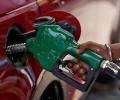
The ministry of petroleum and natural gas has granted seven authorisations to companies for selling automobile (auto) fuels in the country. These new approvals are under the relaxed guidelines for authorisation to market transportation fuels that were revised in 2019. This is expected to make the competition more intense in India's petroleum retail business. According to a top oil ministry official, a fresh marketing authorisation has been granted to Reliance Industries (RIL) under these norms. This is being done since RIL's existing retail marketing authorisation has been transferred to its subsidiary Reliance BP Mobility

Tata Motors is likely to exit the S&P BSE Sensex and the Nifty50 indices once the demerger process of its commercial vehicle (CV) and passenger vehicle (PV) businesses is complete, analysts at Nuvama Institutional Equities said. They have compared the development with Reliance Industries (RIL) and Jio Financial Services, which got listed separately and eventually (in the next few days) got excluded from the domestic indices.

International oil prices continue to be extremely volatile, falling on one day and rising thereafter, a top oil ministry official said explaining the reason behind no reduction in petrol and diesel prices despite softening in input cost, but could not say if the rates will be cut before Maharashtra elections. Global oil benchmark Brent crude futures fell below $70 per barrel last week -- the first time since December 2021 -- but gained thereafter. Brent was trading at $74.58 per barrel on Thursday while West Texas Intermediate advanced to trade at $71.71.

Shortages of chips will impact the car market

The Oil ministry is set to raise the diesel prices by Rs 10 per litre over the next ten months. Planning Re 1 increase per litre per month for the coming 10 months. This means the wide-gap between diesel and petrol will reduce. Should a car buyer still buy diesel cars or opt for other options?

Passenger vehicles, motorcycles, bikes and commercial vehicles made their presence felt at the Munich Auto Show.

'Right now, we are increasing production in anticipation of the demand during the festive season.' 'If the demand doesn't come back, all the production will languish in the factories.'
India will never provide company or enterprise-specific incentives in the electric vehicle sector, a top government official said on Friday, amid a push from American electric carmaker Tesla for special sops to set up its factory in the country. If the government has to consider providing incentives then it will only be for all EV makers and entrants who want to come to India, the official said. The official added that inter-ministerial discussions have happened on the customs duty concession demand of the US-based electric car maker Tesla, but "we never" came to any conclusion on those.

Passenger vehicle wholesales in India slipped to a 10-year low in the April-December this fiscal, and the industry will have to work hard to regain better volumes and business health, industry body SIAM said on Thursday.

Market linking of petrol and diesel prices has helped the industry.

'I think some of us, like Mukesh Ambani, myself and those of us who head industrial units, ought to really focus on what we can really do to make the world a safer place, maybe 50 or 100 years from now.' 'For instance, how can we deal with climate change and global warming, right now?' 'The effects of it may not be felt now; in fact, we may pay a price for it today, but it will help the generations to follow.'

In a major victory for Tatas, an arbitral tribunal has awarded Tata Motors a compensation of over Rs 766 crore for the losses incurred because of protests by Trinamool Congress that stalled its small car project at Singur in West Bengal. The tribunal asked the West Bengal government to pay Tata Motors the compensation, along with interest, according to a stock exchange filing by the Mumbai-based auto major on Monday. The company stated that the arbitral tribunal has asked the West Bengal Industrial Development Corp (WBIDC) to pay the company Rs 766 crore compensation, in connection with losses incurred on its manufacturing site in Singur.

Global rating agency Moody's on Monday raised India's growth forecast for 2024 calendar year to 6.8 per cent, from 6.1 per cent estimated earlier, on the back of 'stronger-than-expected' economic data of 2023 and fading global economic headwinds. India's real GDP expanded 8.4 per cent year-over-year in the fourth quarter of calendar year 2023, resulting in a 7.7 per cent growth for full-year 2023. Capital spending by the government and strong manufacturing activity have meaningfully contributed to the robust growth outcomes in 2023, Moody's Investors Service said.

The auto component industry caters to automobile industry through a whole gamut of auto parts such as engine parts, body & chassis, electrical parts, drive transmission & steering parts, braking, suspension etc.

The first leg of the 35-day festive period, which ended with Dussehra, failed to bring any cheer for auto companies. While makers of passenger vehicles struggled to meet demand due to the persistent shortage of semiconductors, a recovery in demand remained elusive for two-wheeler manufacturers despite offers and schemes. The overall season, which ends two days after Diwali, is unlikely to bring any turnaround in either the supply or the demand scenario, said dealers and officials at auto companies.

The US government, that invested $49.5 billion in the Detroit automaker to save thousands of jobs at the height of the financial crisis five years ago, lost about $10 billion, Treasury Secretary Jacob Lew said on Monday.

The revenue growth of early birds or companies that have declared their Q4FY24 (March quarter) numbers is the highest in the last four quarters. The 178 companies (excluding their listed subsidiaries) that declared their results have reported a sales growth rate of 13.2 per cent year-on-year (Y-o-Y), taking aggregate revenue to Rs 9.1 trillion. Including other income, growth is at 16 per cent, the highest in the last four quarters.

'We will see a lot of investments from the private sector.' 'As long as we are not impacted by some global events, I think we will be in a strong place.'

Auto Expo's Twitter handle (@AEMotorShow), with a follower base of 16,000, is abuzz with activity. The Facebook page of Auto Expo has about 158,000 followers.

Reliance Industries was the biggest gainer in the Sensex pack, rising 2.69 per cent, followed by HCL Tech, ICICI Bank, Tata Motors, Wipro, IndusInd Bank, JSW Steel, Wipro, Tata Consultancy Services and Titan. In contrast, NTPC, Power Grid, UltraTech Cement, Axis Bank, Infosys and Nestle were the major laggards.

Overall market reaction to the Budget was neutral. Investors absorbed the changes to the tax rates (positive for salaried class) and capital gains taxes (CGTs, negative due to the removal of indexation and increases. Other proposals largely pertain to supporting rural development, buybacks taxed as dividends, Custom duty changes that impact multiple sectors, higher outlays for clean energy, etc. There's some moderation in the growth of capex outlay across defence, fer

Passenger vehicle wholesales in India declined by 27 per cent year-on year in October with semiconductor shortage hitting production of automobile manufacturers, auto industry body SIAM said on Friday. Passenger vehicle sales last month stood at 226,353 units, as compared to 310,694 units in the year-ago period. As per the latest data by the Society of Indian Automobile Manufacturers (SIAM), two-wheeler dispatches to dealers also witnessed a 25 per cent decline at 15,41,621 units, compared to 20,53,814 units in October 2020.

The Softbank-backed company has set a price band of Rs 72 to Rs 76 per share for the maiden share sale and is expected to test the appetite for new-age loss-making companies.
